
Dyes & Textiles Tour
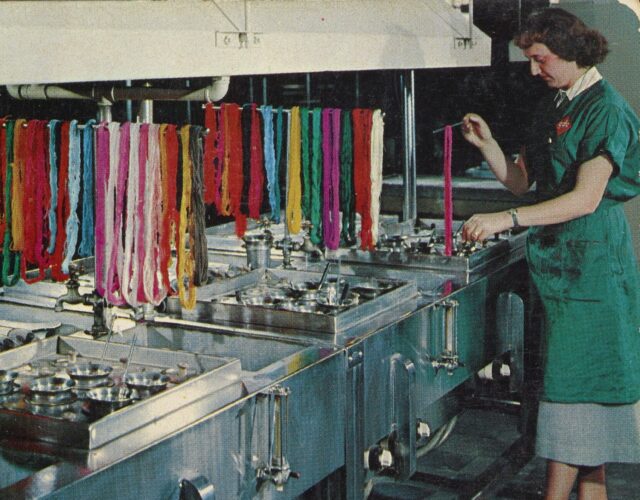
Join our museum’s Gallery Guides for a “drop-in” tour highlighting the remarkable scientific properties of natural dyes and textiles, the technology behind synthetic clothing, and the impact of fashion on human health and the environment.
Have you ever thought about the science behind the contents of your closet? The technology that produces our modern clothing is the result of an unlikely collaboration between prehistoric humans, an 18-year-old chemist in Victorian London, and a Harvard professor employed by DuPont on the eve of World War II.
Our Dyes & Textiles Tour bridges content from our new BOLD exhibition and our permanent exhibition, offering a broad picture of the scientific developments that shifted clothing production from the home to the factory to the laboratory.
Drop-in tours are free and no reservations are necessary.
More events
Study Hall x Distillations: American Vice
Come celebrate our newest Distillations podcast season with a special performance by the Crossroads Comedy Theater Company!

Art of Alchemy Self-Guided Visit
Step into the age of alchemy and explore works in our new permanent exhibition, Fire and Gold: The Art of Alchemy (1450–1850).

Fireworks Tour
Join our Gallery Guides for a drop-in tour of our special exhibition on the fascinating history and science of pyrotechnics.