Humphry Davy
Davy was a charismatic English chemist, poet, inventor, fisherman, and scientific administrator. How have biographers approached his multifaceted story?
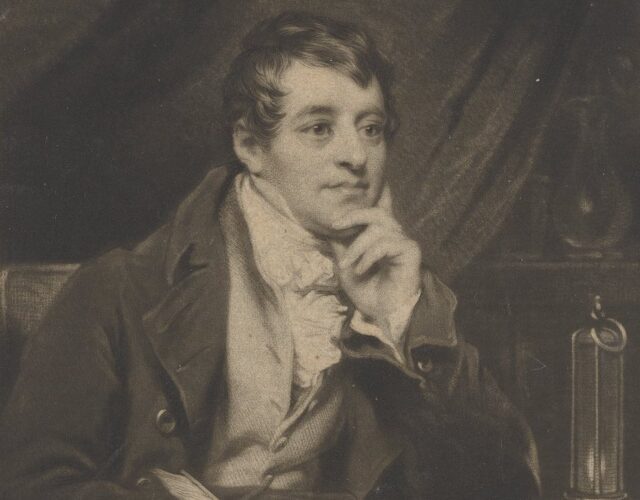
Humphry Davy (1778–1829) was born in Cornwall, the westernmost county of England. His life was dominated by the global wars his country was navigating at the time: first against the 13 American colonies (up to 1783), and later against the new French republic and Napoleone Buonaparte (from 1794 to 1815). The tense political atmosphere that emerged in Britain as a result and the severe restrictions on European travel that came from the conflicts directly impacted Davy’s life and career. He made shrewd choices in the face of these conditions to achieve wealth and fame as a scientific lecturer, inventor, and leader of the Royal Institution and the Royal Society of London.
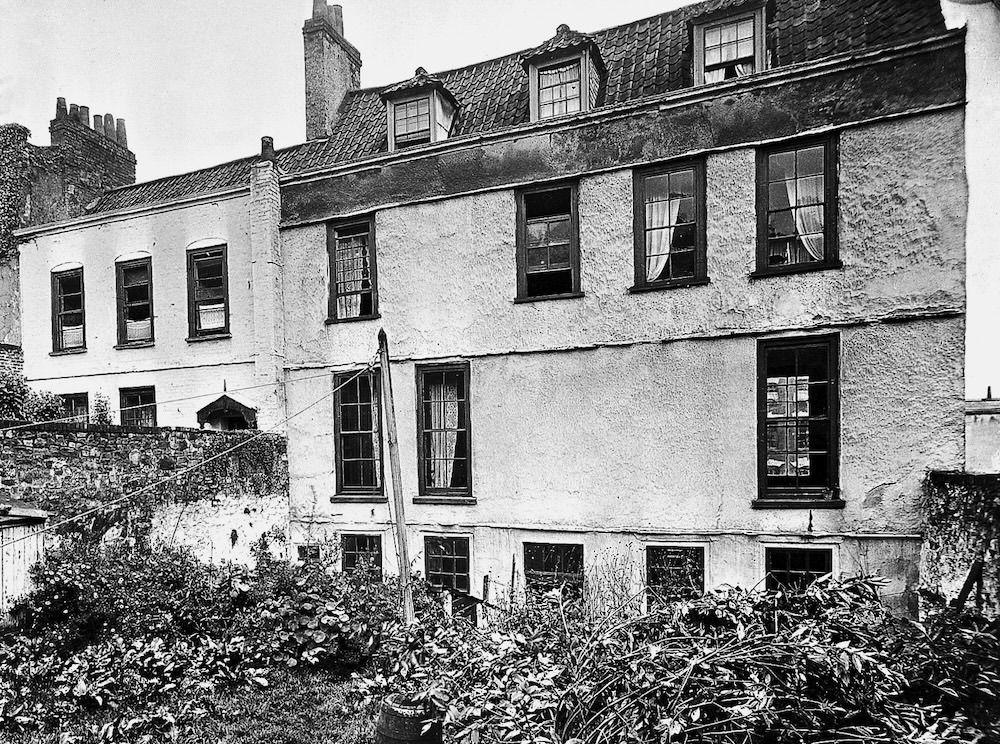
Radical Roots
Davy’s father worked as a small farmer who supplemented his income through odd jobs. From early on, it was quite evident that Davy had academic talent. He attended Penzance and Truro grammar schools, where he would have learned basic Latin and Greek. He wanted to study medicine at Edinburgh University, but this proved impossible after his father’s death. Instead, he was apprenticed to a Penzance apothecary.
In the winter of 1797, Gregory Watt, the younger son of the famous engineer, rented a room from Davy’s mother. Davy and Watt became close friends, and Watt introduced Davy to a group of medical and political radicals led by the physician Thomas Beddoes in Bristol. Watt also introduced Davy to chemistry, which led to Davy undertaking various experiments using everyday objects. More significantly, at age 19, he wrote a detailed essay on modern French chemistry in which he challenged key concepts advanced by Antoine Lavoisier, an architect of modern chemistry.
Watt took the essay to Beddoes, who swiftly appointed Davy to be superintendent of his Medical Pneumatic Institution in 1798. Beddoes had just spent five years raising funds to establish the Institution: its objective was to investigate the therapeutic value of various recently discovered gases in the treatment of tuberculosis. During his time at the Institution, Davy discovered the extraordinary physiological properties of nitrous oxide, also known as “laughing gas,” conducting extensive experiments on himself. On one occasion after inhaling seven quarts of the gas, he wrote in his notebook in one-inch letters, “Davy and Newton,” putting his own name before that of the iconic scientist. While in Bristol, Davy also carried out his earliest experiments on the new electric battery invented by Alessandro Volta and collaborated with leading literary figures of the day, including Samuel Taylor Coleridge.
LEARN MORE
The Davy Notebooks Project crowdsourced transcriptions of all of Davy’s notebooks on the Zooniverse platform. In them, you can read his poetry alongside descriptions of his laboratory experiments. How does reading Davy’s private thoughts compare to this biographical account of his public persona? Does it surprise you that he devoted energy to both poetry and chemistry? Why or why not?
Beddoes and Davy were criticized for their support of the revolution in France, among other radical positions, and there is evidence that they were under government surveillance. Davy, who knew he needed to earn a living through the practice of science, seems to have thought that having strong radical connections would negatively affect his career. He began looking for alternative employment in his early 20s.

London Lecturer
In 1801 Davy was offered the position of assistant lecturer in chemistry at the prestigious Royal Institution in London. Leaving his radical roots for the imperial Royal Institution in the capital city was an extraordinary move. The president of the Royal Society at the time was Joseph Banks, who hated Beddoes, Davy’s former mentor, for his politics. How Davy convinced the Royal Institution of his political soundness is quite a mystery.
But the appointment was a success, and Davy became the most popular scientific lecturer in London during the first decade of the 1800s. He also became professor of chemistry to the Board of Agriculture, where he delivered equally popular lectures. Davy emphasized the openness and utility of scientific knowledge in these lectures—science was in its infancy, he frequently said. He also continued his research on electricity during this phase of his career, developing the first coherent theory of electrochemical action, a term he coined. He constructed increasingly large batteries, which he used to isolate and name several chemical elements, including potassium, sodium, calcium, and magnesium. Later he worked on chlorine as well.
After 10 years at the Royal Institution, Davy was looking for a change. The opportunity came when he met Jane Apreece (circa 1780–1855), a wealthy widow whose money came from her father’s activities in the British sugar slave colony of Antigua. She had capital of £60,000 (approximately $7,200,000 today) and an annual income of around £4,000 (approximately $480,000 today), a considerable sum at the time. Apreece wanted a title to complement her wealth, so she ensured that Davy was knighted two days before they married. Thus, Jane immediately became Lady Davy upon their marriage.
Aristocratic Adventures
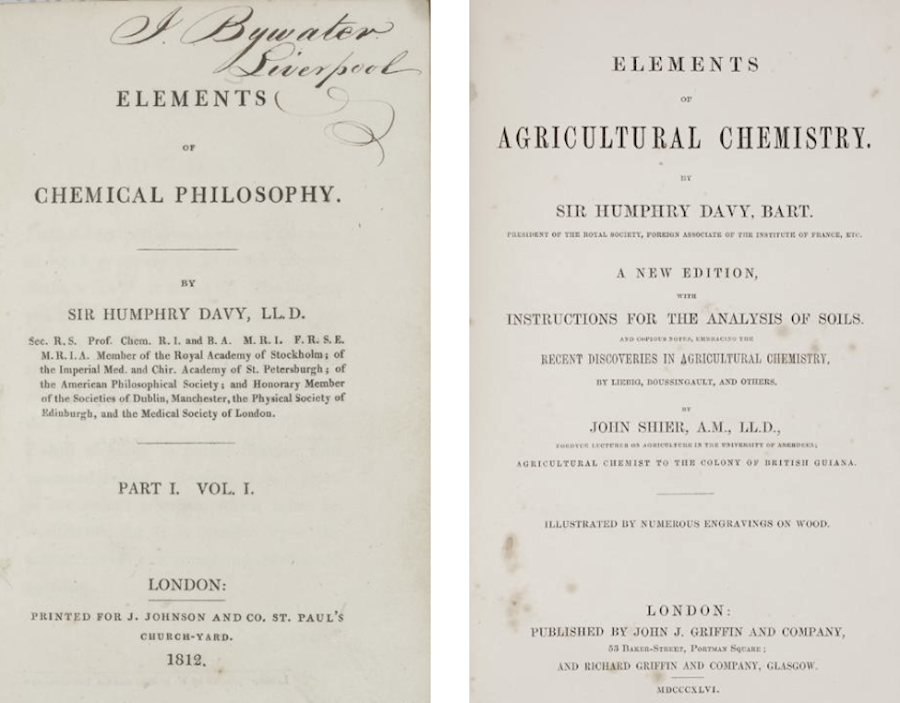
Davy resigned all his paid positions and said that he would devote himself fully to research and writing, a promise that he kept. He quickly published his Elements of Chemical Philosophy (1812) and Elements of Agricultural Chemistry (1813). Despite Davy’s productivity, there were tensions in the marriage from the start. In 1822 there was talk of a formal separation, but that came to nothing.
The year after their marriage, the Davys took a trip to the French Empire and Italy. Davy showed that iodine was a chemical element in Paris, he experimented with electric torpedo fish in southern France, and he climbed Mount Vesuvius twice in Naples (he had longstanding interests in the theory of volcanoes). The couple originally intended to continue into the Ottoman Empire, visiting Constantinople (now Istanbul) and Greece. However, quarantine regulations, Napoleon Buonaparte’s escape from Elba (for the Hundred Days), and personal factors led them to cut the tour short and return to London in April 1815.
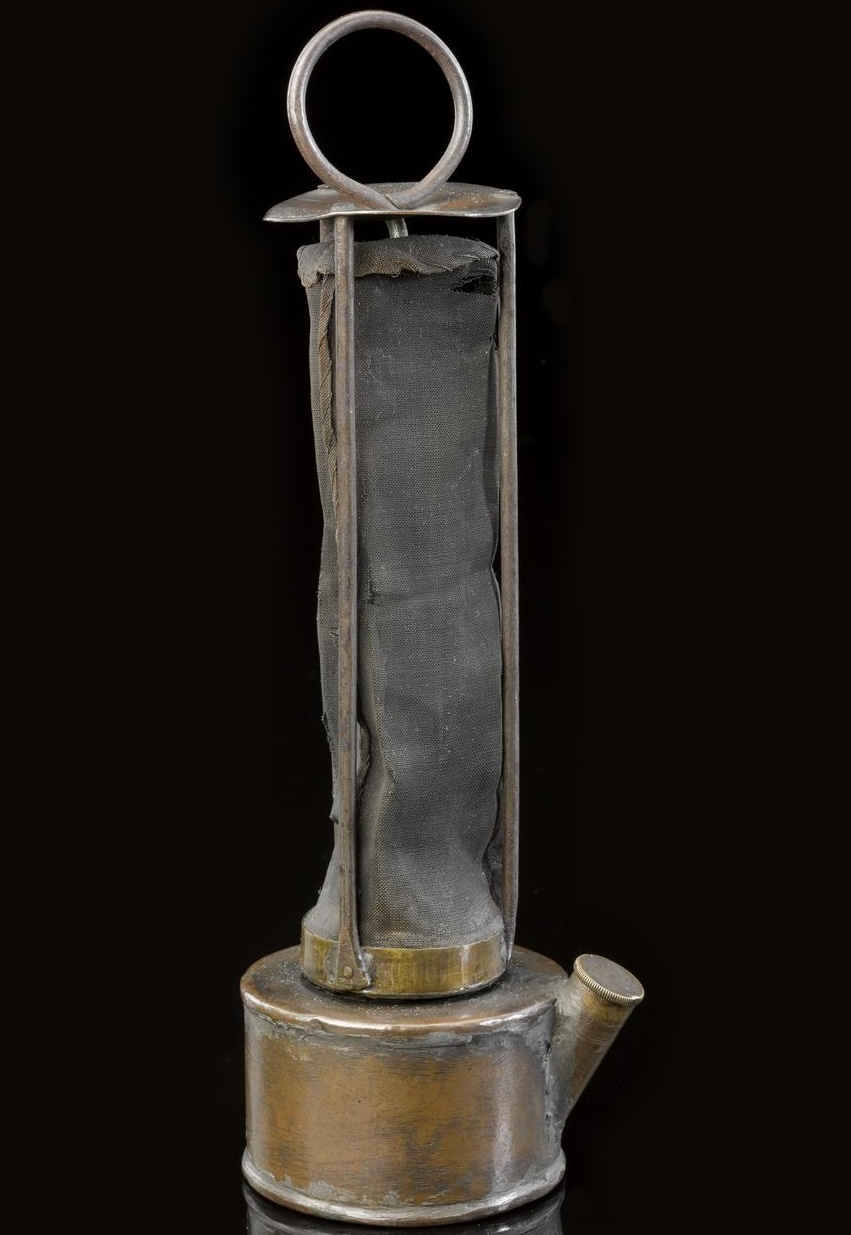
Shortly after this return, Davy received a letter from the Rector of Bishopwearmouth, a village near Newcastle in northern England, asking him how to light coal mines safely. Intrigued, Davy visited coal mines to collect samples of firedamp, or methane, which frequently caused explosions when miners used an open candle flame to light their way. He then commenced an intensive period of research working with the Royal Institution’s laboratory assistant, Michael Faraday, and its instrument maker, John Newman. This resulted in the invention of the gauze safety lamp, a design whereby metal gauze absorbed the heat of a flame, preventing an explosion while allowing light to pass through. This was tested in 1816 and found to work practically. The implementation of the lamp had a profound effect in reducing the number of fatalities per ton of coal produced in the ensuing years. Unfortunately, Davy displayed a very unpleasant side of his character in a controversy with the engineer George Stephenson, who had invented a different type of safety lamp. Davy treated him with complete contempt as someone of lower social standing than himself.
Toward the end of the controversy, Davy was commanded personally by George IV—acting ruler, or Prince Regent, of the U.K.—to investigate ancient papyri buried by the eruption of Vesuvius, which had been excavated in the mid-1700s. While Davy was successful in unrolling and obtaining text from a significant number of these, he unfortunately destroyed the papyri in the process. The government of Naples also claimed that the intellectual property in the papyri was theirs, motivating Davy to abruptly leave Naples for home.
Reputation and Recovery
Joseph Banks, longtime president of the Royal Society, was on his deathbed when Davy returned to London. Following Banks would have been a tall order for anyone, but Davy—who was intensely ambitious, if entirely unsuitable—believed he was capable of filling the role. He had a hard time distinguishing between the official role of president and his own work. This led to a dispute with the key Admiralty faction within the Society, which prompted the abolition of the Board of Longitude, one of the very few sources of state funding for science.
The outcome was that Davy suffered a stroke, went abroad, and resigned the presidency. He fished in Carinthia (modern Slovenia), traveled in Italy, and ended up in Geneva knowing that he was dying. Lady Davy came from London to join him, as did his brother, John. Davy died in Geneva in May 1829 and was buried in the Plainpalais cemetery there with full civic honors.
Davy’s mixed reputation was expressed in the earliest biographies published about him. The first, published in 1831 by John Ayrton Paris, was deeply critical. The second, published by his brother five years later, was far too celebratory for most readers. Despite their shortcomings, these two biographies have been used uncritically by historians until recently.
New research going back to primary manuscript sources is reshaping our understanding of Davy’s life. Up through the 1980s, while Britain still had a strong mining industry, Davy was one of the best-known scientific figures. Now that that is no longer the case, Davy’s life has become a powerful case study for studying the interaction between science and society.
Glossary of Terms
Apothecary
Apothecaries made medicines and sold them in shops similar to pharmacies today. In Davy’s lifetime, an apothecary would have also provided basic medical services, like a present-day primary care physician.
Back to top
Hundred Days
A period in French history following the escape of Napoleon Buonaparte from his imprisonment on the Island of Elba on March 20, 1815. The period ended when Louis XVIII returned to Paris to resume the throne after Napoleon was defeated at the Battle of Waterloo.
Back to top
Papyri
Manuscripts or the thick paper-like material used for composing manuscripts in the ancient Mediterranean. Made from the stems of the plat, Cyperus papyrus, a sedge that grew abundantly in the Nile Delta, these “papers” were rolled up in scrolls, as a kind of early book.
Back to top
Further Reading
James, Frank A. J. L. “New Sources for Reconstructing the Discovery of Potassium and Sodium: Manuscripts and Letters Relating to their Electrical Detection, Isolation, Naming, Announcement, and Publication by Humphry Davy.” Ambix 72 (2025): 143-172.
Pizzi, Richard A. “Humphry Davy, Self-Made Chemist,” American Chemical Society: Chemistry Chronicles.
Support
Support for this biography was made possible by the Wyncote Foundation.
You might also like
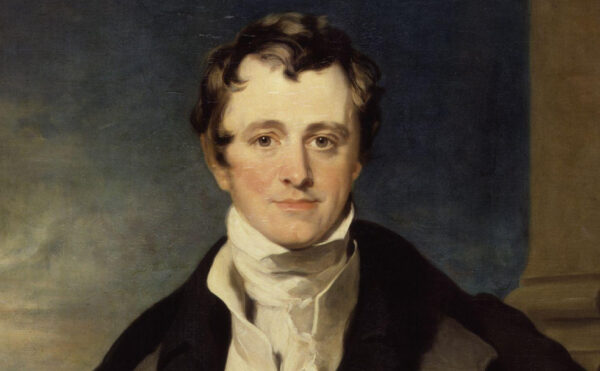
DISTILLATIONS MAGAZINE
Left Behind
In the early 19th century, Humphry Davy was a scientific superstar, but then science and the world around him changed.
DIGITAL COLLECTIONS
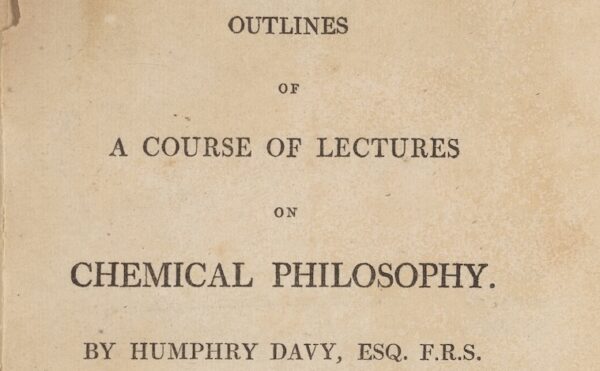
Outlines of a Course of Lectures on Chemical Philosophy
Syllabus for one of Humphrey Davy’s earliest courses of lectures given at London’s Royal Institution.
DISTILLATIONS MAGAZINE
High Times
When does self-experimentation cross the line?