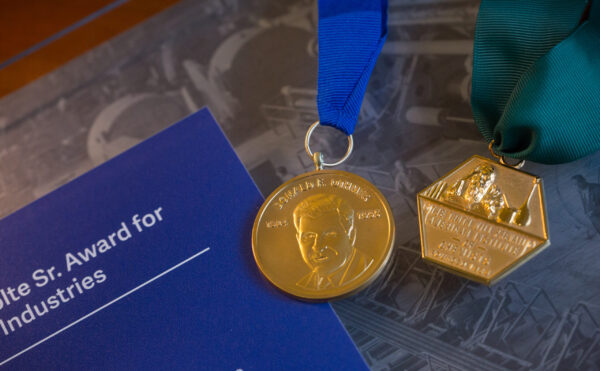
Richard J. Bolte Sr. Award for Supporting Industries
Whether it’s by providing laboratory space, moving freight around the world, or creating software to assist with research, supporting industries make much of the science we rely on possible.
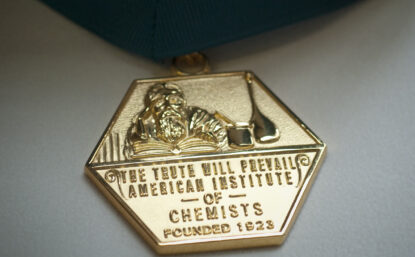
The Richard J. Bolte Sr. Award for Supporting Industries honors those who provide products or services vital to the continuing growth and development of the chemical and molecular sciences community. Created in 2006 and named after the award’s first winner—BDP International founder and chair Richard Bolte—the medal is presented each spring.
2026 Awardee: Joel S. Marcus
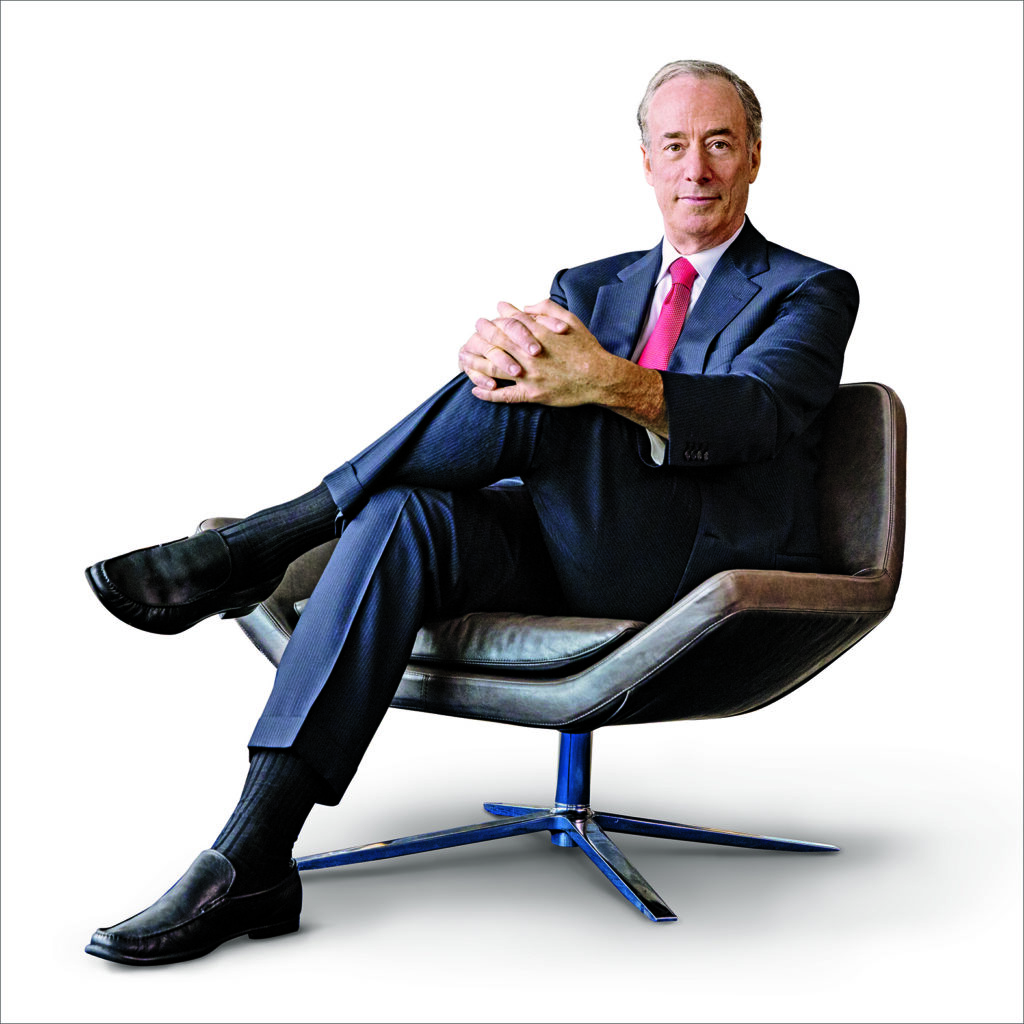
The Science History Institute’s 2026 Richard J. Bolte Sr. Award for Supporting Industries will be presented to Joel S. Marcus during a gala and awards ceremony on Wednesday, May 6, 2026, at the Institute in Old City Philadelphia.
Joel Marcus is the executive chairman and founder of Alexandria Real Estate Equities, Inc., a real estate investment trust (REIT) that pioneered life science real estate and transformed it from a specialty niche into a mainstream asset class. Alexandria is the preeminent, largest, and longest-tenured owner, operator, and developer uniquely focused on collaborative Megacampus™ ecosystems in AAA life science innovation cluster locations. Prior to 2018, Marcus served as the company’s chairman, chief executive officer, and president.
Since cofounding the company in 1994 as a garage startup with $19 million in Series A capital, Marcus has led the remarkable growth of Alexandria into an S&P 500® company and the leading REIT focused on the life science industry. Alexandria was named the NAIOP 2019 Developer of the Year and has earned seven gold and eight overall Nareit Investor CARE (Communications and Reporting Excellence) awards in recognition of superior investor communications among REITs. The company has been named by Newsweek as one of America’s Most Trustworthy Companies for three consecutive years and one of the World’s Most Trustworthy Companies for two years in a row, reinforcing its standing as the most trusted brand in life science real estate.
During Marcus’s more than three decades leading Alexandria, he has built a best-in-class company with a differentiated business model and a unique mission―to create and grow life science ecosystems and clusters to advance human health―that continue to distinguish Alexandria from all other REITs. Guided by Alexandria’s important mission, Marcus established four strategic and integrated verticals encompassing real estate, venture investments, thought leadership, and corporate responsibility that together catalyze life-changing innovation and drive positive change for the benefit of human health and society.
Marcus accelerated Alexandria’s extraordinary growth through the execution of its visionary ecosystem-building and cluster development strategy in key locations, including Greater Boston, the San Francisco Bay Area, San Diego, Seattle, Maryland, the Research Triangle in North Carolina, and New York City. He founded and continues to lead Alexandria Venture Investments, the company’s strategic venture capital platform. Since the platform’s inception in 1996, it has actively invested in disruptive life science companies that are advancing transformative new modalities, platforms, and innovative medicines to meaningfully improve human health.
Marcus introduced the company’s thought leadership vertical in 2011, when he cofounded the renowned Alexandria Summit®. Established to serve as a highly collaborative, neutral platform, the Alexandria Summit convenes a world-class network of visionary stakeholders to explore the most important issues facing human health and leverage its powerful collective voice to foster impactful collaborations and shape policy. In 2025, Alexandria received the Charles A. Sanders, MD, Partnership Award from the Foundation for National Institutes of Health (FNIH). This historic award recognizes the company’s significant contributions to the FNIH’s work in accelerating biomedical innovation, epitomized by Alexandria’s leadership in catalyzing a mission-critical public-private partnership with the FNIH to build a precision medicine framework for depression to address the urgent need for new, more effective medicines for patients.
Marcus leads Alexandria’s pioneering corporate responsibility initiatives, which aim to develop and implement scalable, long-term solutions to some of the nation’s most urgent challenges, including disease and other threats to human health; hunger and food insecurity; deficiencies in support services for the military and their families; disparities in educational opportunities; and the mental health and addiction crises. In 2025, Alexandria was named one of America’s Most Charitable Companies by Newsweek, reinforcing its steadfast commitment as a mission-driven company.
A noted nonprofit leader, Marcus serves on the board of directors for the Navy SEAL Foundation, providing critical support for the warriors, veterans, and families of Naval Special Warfare. He is a deeply engaged board member at the Emily Krzyzewski Center, which develops the academic and leadership potential of underrepresented students in higher education, equipping them to connect to careers and serve as agents of change. Marcus is also on the boards of the National Medal of Honor Museum and the TOPGUN Association. He previously served on the board of the National September 11 Memorial & Museum, helping to commemorate those who lost their lives in the terrorist attacks of September 11, 2001, and February 26, 1993.
Prior to cofounding Alexandria, Marcus had an extensive legal career specializing in corporate finance and capital markets, venture capital, and mergers and acquisitions. During that time, he acquired expertise in the biopharmaceutical industry and was one of the principal architects of Kirin-Amgen, Inc., the trailblazing joint venture established in 1984. He was also a practicing certified public accountant and tax manager with Arthur Young & Co.
In addition to being honored with the Institute’s Richard J. Bolte Sr. Award for Supporting Industries, Marcus also received the inaugural Bisnow Life Sciences Icon & Influencer Award in September 2024, is a recipient of the EY Entrepreneur of the Year Award, and was named one of Real Estate Forum’s 2017 Best Bosses in commercial real estate.
Marcus received his undergraduate and JD degrees from the University of California, Los Angeles.
Winners of the Bolte Award
- Lita Nelsen (2025)
- Kenan E. Sahin (2024)
- David C. Jukes (2023)
- Barry Siadat (2022)
- Steven Holland (2021)
- Frederick Frank (2019)
- W. Graham Richards (2018)
- Peter Young (2017)
- Roy Eddleman (2016)
- Abdulaziz Al-Zamil (2015)
- Atsushi Horiba (2014)
- Alan G. Walton (2013)
- G. Steven Burrill (2012)
- Lawrence Evans (2011)
- Berdon Lawrence (2010)
- David and Alice Schwartz (2009)
- Jerry Sudarsky (2008)
- Eugene Garfield (2007)
- Richard J. Bolte Sr. (2006)